
Some children learn to read the room before they learn to read words. They notice the sigh before the argument, the silence before the storm, the subtle shift in tone that means something is wrong. They adapt quickly, quietly, and often voluntarily not necessarily because anyone told them to, but because it made things feel…
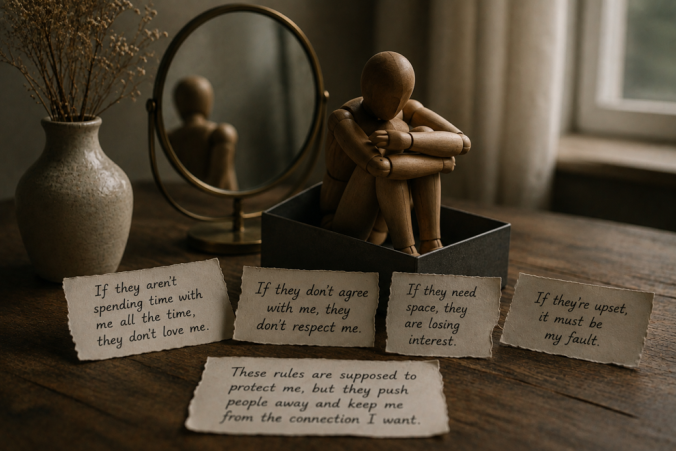
Most people don’t sabotage relationships because they don’t care. Often, they sabotage because they’re scared of being hurt, rejected, dismissed, or misunderstood. Over time, those fears can solidify into rigid internal rules that feel like truth, even when they quietly undermine connection. These rules often operate beneath awareness. They show up as emotional reactions that…

Most people can name the roles they played in their family growing up, the responsible one, the helper, the peacemaker, the achiever. But some roles are not just personality traits. They are survival strategies. Parentification is one of the most invisible and misunderstood of these patterns, and yet it shapes adult functioning in profound ways….

Many people with ADHD find that their attention and motivation are strongly influenced by interest, novelty, urgency, and emotional salience, rather than importance alone. When an interest-driven brain is expected to operate in an importance-driven world, a predictable stress cycle can develop. Understanding this cycle is the first step toward interrupting it with compassion rather…

Most adults who struggle with self‑doubt, people pleasing, or perfectionism don’t realize how often they are evaluating themselves. Not reflecting, not observing but evaluating. Over‑evaluation is the constant measuring, judging, and scoring of your worth, choices, performance, or emotional experience. It’s subtle, automatic, and often feels like “just being responsible,” but it quietly pulls you…

Relational guilt is one of the most powerful emotional forces in adulthood and one of the least talked about. It is the quiet, persistent feeling that you are letting someone down, being too much, not doing enough, or hurting someone by having needs. It shows up in romantic relationships, friendships, family dynamics, and even workplace…

Perfectionism is often praised in professional and academic spaces: the polished email, the flawless presentation, the spotless performance review. It works when you’re describing environments shaped by high standards, performance pressure, or perfectionistic norms. But when we start applying those same perfectionistic standards to our relationships, our self-worth, or our daily lives, they stop protecting…
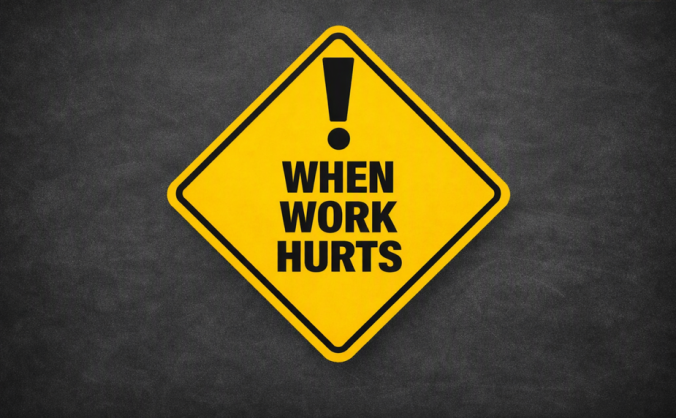
Workplace trauma doesn’t always look like a single catastrophic event. More often, it builds slowly through chronic stress, harassment, unsafe dynamics, emotional manipulation, discrimination, retaliation, or environments where your nervous system never gets to settle. And because the body keeps score long before the mind can name what’s happening, workplace trauma often shows up physically…

Have you ever understood exactly why you struggle in relationships but still found yourself repeating the same painful patterns anyway? You’re not alone. Many people understand their relationship patterns perfectly yet still feel pulled back into the same cycles of over-giving, shutting down, choosing emotionally unavailable partners, avoiding conflict, people pleasing or losing themselves in…

When a relationship no longer serves your well-being, the standard advice you will hear from well-meaning friends is simple: “Just walk away.” But anyone who has ever tried to untangle themselves from a dysfunctional interpersonal dynamic knows that executing that decision is rarely a neat, linear process. Instead, a common psychological trap occurs: we decide…
Sidebar
About Me