Therapy for Anxiety, Trauma, and Self‑Esteem in Gainesville, Jacksonville and throughout the State of Florida

Category: Anxiety

Practicing Imperfection: How Letting Go Creates Nervous System Flexibility

Perfectionism is often praised in professional and academic spaces: the polished email, the flawless presentation, the spotless performance review. It works when you’re describing environments shaped by high standards, performance pressure, or perfectionistic norms.  But when we start applying those same perfectionistic standards to our relationships, our self-worth, or our daily lives, they stop protecting us and start constraining us. Social media reinforces these patterns by presenting curated, polished versions of people’s lives and achievements, making imperfection feel like failure.

For many people, perfection is not a preference. It is a survival strategy.

Perfectionism isn’t always trauma based. Some people are naturally detail oriented. But when perfectionism develops in unsafe environments, it becomes a nervous system strategy for protection.

Rigid internal rules like “I can’t make mistakes,” “I must always be prepared,” or “I should never disappoint anyone” don’t always come from personality. They come from environments where imperfection was not safe. Workplaces, family systems, or relationships that punished mistakes teach the nervous system to equate being imperfect with being in danger.

This is why practicing imperfection is not about lowering standards. It is about retraining the nervous system to tolerate flexibility, uncertainty, and self-permission.

Rigid Rules Are Born From Survival, Not Preference

When someone grows up or works in environments where mistakes were criticized, shamed, or used against them, the nervous system adapts. It creates rules to stay safe:

“I must get everything right.” “I can’t rest until everything is done.” “I should always anticipate problems.” “I can’t let anyone down.” “Everybody must like me.”

These rules reduce uncertainty, and uncertainty feels threatening to a dysregulated nervous system.  Sometimes these rigid rules don’t come from criticism or shame at all. They can come from growing up with parents who had high expectations, parents who were highly accomplished, or environments where excellence was simply the norm.

Perfectionism becomes a somatic strategy, not a personality trait.

Imperfection as a Nervous System Exercise

Practicing imperfection is not about being careless. It is about intentionally doing something not perfectly so your nervous system learns:

“I can make a mistake and still be safe.” “I can pause and the world does not collapse.” “I can be human without losing my worth.”

This is exposure therapy for the nervous system: gentle, controlled, and compassionate.

Micro Practices: Small Imperfections That Build Flexibility

These practices are intentionally tiny. They are designed to stretch your nervous system without overwhelming it.

Try one at a time:

Send an email without rereading it five times. Leave a small task unfinished overnight. Let a typo stay in your personal notes. Choose the “good enough” option instead of the perfect one. Take a break before everything is done. Allow yourself to arrive two minutes late to a low-stakes meeting. Wear something comfortable instead of ideal.

Each act is a message to your nervous system: imperfection is survivable.

Over time, these small exposures create somatic flexibility: the ability to adapt, soften, and respond rather than brace, tighten, or overperform.

Why Imperfection Reduces Shame

Rigid rules often come with shame. Shame says:

“If I am not perfect, I am failing.”

“If I make a mistake, I am disappointing everyone.”

“If I slow down, I am falling behind.”

Perfectionism leaves a lot of room for feeling disappointed, inadequate, or like a failure because the standard is always just out of reach.

Practicing imperfection interrupts this cycle.

As you experiment with small imperfections, you learn:

The world does not fall apart. You remain competent, capable, and valued. Your nervous system can handle uncertainty. You can trust yourself more.

Shame softens. Self-trust grows.

Flexibility Is a Trauma Healing Skill

Flexibility is not just a mindset. It is a nervous system capacity.

Flexibility allows you to adapt to change, tolerate uncertainty, shift out of rigid rules, respond instead of react, rest without guilt, and make decisions without fear.

Practicing imperfection is one of the most effective ways to build this capacity.

It is not about lowering your standards. It is about expanding your safety.

Final Thoughts

Imperfection is not a flaw. It is a practice. It is a nervous system skill. It is a doorway to flexibility, safety, and self-permission.

When you soften the rules that once protected you, you create space for a life that does not require perfection to feel safe.

When Work Hurts: How Workplace Trauma Shows Up in the Body & What You Can Do

Workplace trauma doesn’t always look like a single catastrophic event. More often, it builds slowly through chronic stress, harassment, unsafe dynamics, emotional manipulation, discrimination, retaliation, or environments where your nervous system never gets to settle. And because the body keeps score long before the mind can name what’s happening, workplace trauma often shows up physically before you realize the impact.

How Workplace Trauma Feels in the Body

1. Hypervigilance

You may feel constantly “on alert,” even when nothing is happening. Your body stays braced, shoulders tight, jaw clenched, breath shallow as if waiting for the next blowup, email, meeting, or conflict.

2. Exhaustion that rest doesn’t fix

Trauma drains the nervous system. You might sleep, take time off, or step away, yet still feel tired because your body hasn’t had a chance to come out of survival mode.

3. Digestive changes

Stress hormones affect digestion. Workplace trauma can show up as nausea, appetite changes, IBS flare-ups, or stomach pain before work or meetings.

4. Headaches, migraines, and muscle tension

Your body absorbs the emotional load. Chronic tension in the neck, shoulders, and back is common when you’re constantly bracing for impact.

5. Cardiovascular activation (including elevated blood pressure)

When the body stays in a prolonged stress response, the heart works harder. You may notice a racing heartbeat, chest tightness, or increased blood pressure during or after work stress.

6. Emotional reactivity

You may feel irritable, numb, anxious, detached, or overwhelmed not because you’re “too sensitive,” but because your nervous system is overworked.

7. Difficulty concentrating

Trauma pulls your attention toward threat. It becomes harder to focus, remember details, or make decisions — especially in environments that feel unsafe.

Why Workplace Trauma Hits So Hard

Work is where your livelihood, identity, and stability live. When the environment becomes harmful, your nervous system interprets it as a threat to survival not just comfort.

This is why people often stay in toxic workplaces longer than they want to: the nervous system prioritizes safety, predictability, and survival over change.

What You Can Do

1. Name what’s happening

Your body is giving you information. Naming workplace trauma helps shift you out of self-blame and into clarity.

2. Reconnect with your body

Grounding practices help regulate your nervous system:

  • slow breathing
  • stretching
  • walking
  • body scans
  • progressive muscle relaxation

These aren’t “fixes,” but they help your body exit survival mode.

3. Set boundaries where possible

This may look like:

  • limiting after-hours communication
  • declining non-essential tasks
  • documenting incidents
  • reducing exposure to harmful people

Boundaries help your nervous system feel safer.

4. Seek support

Talk to a therapist, trusted colleagues, friends, or mentors. Trauma heals in connection, not isolation.

5. Consider your exit plan

If the environment is unsafe, planning your next steps even slowly helps your nervous system feel less trapped.

6. Rebuild safety outside of work 

Your nervous system needs consistent reminders that it’s not in danger. Creating routines that support regulation helps your body exit survival mode.

This may include:

  • consistent sleep
  • nourishing meals
  • gentle movement
  • supportive relationships
  • grounding rituals
  • daily meditation or breathwork to help your body settle and re‑orient to safety

Even 5 minutes of intentional breathing can help your nervous system shift out of hypervigilance and into steadiness.

What If You Can’t Leave Your Job Yet? What You Can Do

Not everyone can leave a harmful workplace right away. Financial responsibilities, health insurance, retirement, caregiving roles, or limited job opportunities can make “just quit” feel impossible. If you’re in a situation where you have to stay, at least for now, your nervous system needs support even more.

1. Create micro‑boundaries

Small, doable limits that reduce nervous system overload:

  • limiting non-essential communication
  • not responding outside work hours
  • taking short breaks to reset
  • reducing exposure to harmful coworkers when possible

Micro‑boundaries don’t fix the environment, but they help your nervous system breathe.

2. Build “pockets of safety” throughout your day

Your body needs moments where it can settle:

  • stepping outside
  • grounding exercises between meetings
  • stretching at your desk
  • calming music during breaks

These small resets help your nervous system recover from chronic activation.

3. Practice daily regulation outside of work

Your body needs consistent support to counterbalance workplace stress:

  • gentle movement
  • nourishing meals
  • consistent sleep
  • supportive relationships
  • daily meditation or breathwork
  • activities that remind your body it’s not in danger

4. Document what’s happening

Documentation protects you and gives you clarity:

  • save emails
  • write down incidents
  • keep dates and details

5. Strengthen your support system

Talk to people who help you feel grounded: a therapist, trusted friends, mentors, or colleagues who understand the environment.

6. Build an exit plan slowly

Even if you can’t leave now, planning helps your nervous system feel less trapped:

  • updating your résumé
  • exploring remote or hybrid roles
  • researching healthier workplaces
  • saving money where possible

Your nervous system relaxes when it knows you’re not stuck — even if the change is months away.

Final Thoughts

Workplace trauma is real, and it lives in the body long after the workday ends. Healing isn’t about “toughening up” it’s about understanding how your nervous system responds to chronic stress and learning how to support yourself through it. You deserve a work environment that doesn’t require you to survive it.

Moving Beyond the Armor: 3 Steps to Lower Your Guard When You’re Used to Holding It All Together


In our last post, we explored how trying to maintain constant control over your life is a logical survival mechanism, but one that ultimately leaves you running on empty. When you are used to wearing heavy armor, your mind becomes highly efficient at over-thinking, over-preparing, and people-pleasing just to keep emotional discomfort at bay.

Acknowledging that your survival armor is exhausting is the first step. The next question is practical: How do you actually begin to safely lower your guard in your daily life?

When your nervous system has been stuck in “go-mode” for years, you cannot simply force yourself to suddenly relax. Healing requires small, intentional, and repeatable shifts to show your body that it is safe to slow down.

Here are three practical steps to help you interrupt the cycle of control and begin building lasting internal ease.

1.   Shift  to Observing Mode

When anxiety spikes, your mind immediately goes into hyper-drive trying to fix, predict, or manage the situation. This is emotional avoidance in action. Instead of fighting the anxious thoughts or trying to force them away, try to simply name what is happening without judging it.

  • The Practice: The next time you feel your body tense up over an unpredictable schedule change or a minor mistake, pause and mentally say to yourself: “I am noticing that my mind is playing the perfectionism tape right now.” Or, “I am noticing that my chest feels tight and my system wants to take total control.” That’s it no evaluation.
  • The Shift: By changing your language from “I am completely overwhelmed” to “I am noticing that I am experiencing overwhelm,” you step out of the storm and into the role of the observer. This small bit of mental distance stops the overthinking loop from taking over your entire afternoon.

2.   Audit Your Rigid Mental Rules

High-functioning burnout is heavily fueled by automatic, rigid “Should” and “Must” rules we subconsciously place on ourselves. Rules like: “I must be the reliable person for everyone else,” or “If I don’t handle this perfectly, it means I am failing.” These rules act as invisible walls that keep you trapped in non-stop over-functioning.

  • The Practice: Pick one area of your life this week where you feel immense pressure. Write down the underlying rule driving that behavior. Ask yourself: Where did this rule come from? Is it keeping me safe, or is it leaving me running on empty?
  • The Shift: Gently rewrite that rigid rule into a flexible, self-compassionate alternative. Change “I must handle everything myself or I am incompetent” to “I am a capable person, but I am also allowed to have human limits and ask for support.”

3.   Practice Deceleration

If you are trapped in a non-stop hustle culture loop, jumping straight into a 30-minute meditation can feel incredibly frustrating and jarring to a hyper-vigilant nervous system. Instead, practice micro-moments of slowing down to show your brain that stopping does not equal danger.

  • The Practice: Choose one ordinary daily task like drinking your morning coffee, sitting in your car before typing an email, or washing your hands and do it at half-speed. For just 60 seconds, pay complete attention to the physical sensations: the warmth of the mug, the sound of the room, or the feeling of your feet flat on the floor.
  • The Shift: These small physical anchors send a direct safety signal to your brain stem, gently pulling your nervous system out of an anxious future and anchoring it securely back into the peaceful present.

Final Thoughts

Learning how to safely lower your guard when you have relied on armor for years is not a linear process. It takes time, patience, and a willingness to step outside your comfort zone. If your system resists these changes at first, remember that your need for control has protected you from real pain, rejection, or structural burnout in the past.

True emotional flexibility is not about achieving perfect mindfulness; it is about building a gentle, curious relationship with your own internal patterns. You do not have to figure out how to unburden the past or navigate these protective loops all by yourself.

If you are ready to move out of survival mode and build genuine emotional flexibility, a supportive and collaborative therapeutic space is ready for you. I provide specialized individual telehealth for adults anchoring across Gainesville, Jacksonville, and all of Florida. You can view my active booking calendar, structural credentials (CCTP, MCAP), and transparent private-pay options directly on my Services & Rates page.


Ready to Begin?

If you are ready to start therapy or have questions about working together, I would love to connect with you.

3523108470

Send Email

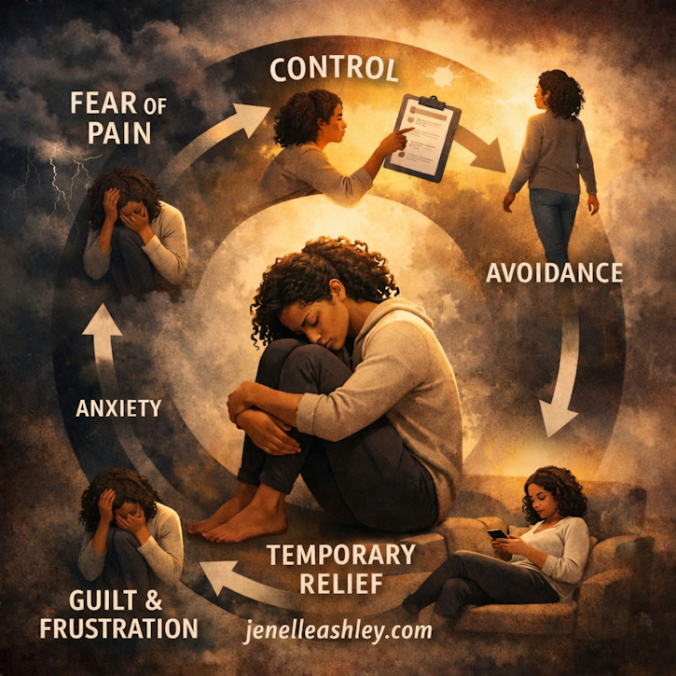
The Exhausting Cycle of Control: Why Avoiding Pain Keeps Us Trapped

We live in a culture that praises productivity, high achievement, polished exteriors, relentless ambition and strength. Social media reinforces this pressure by rewarding curated perfection, the flawless morning routine, the constant hustle, the image of having everything under control. We are taught to hold it all together, be the reliable person for everyone else, and pretend we have everything figured out. But for many adults, behind that successful professional veneer or academic drive lies a quiet, exhausting reality.

When life experiences bring us hurt, rejection, or structural burnout, your natural instinct is self-protection. To survive, you look for ways to have absolute control over your environments, your thoughts, your schedules, and your presentations. You tell yourself that if you can just manage every outcome perfectly, you can keep yourself safe.

But control is an exhausting illusion.

Trying to manage every outcome often becomes a way to hide your true thoughts and feelings. You may pour your daily energy into avoiding pain, pushing down memories, or suppressing uncomfortable emotions. This emotional avoidance is common in anxiety therapy and trauma therapy, but it comes at a heavy cost.

By trying to prevent yourself from feeling pain, you build invisible walls around your life. Over time, those walls trap you in repeating loops of stress, anxiety, depression, perfectionism, and self‑doubt. The very tools you used to protect yourself become the things that isolate you.


Why Control Feels Safe – But Keeps You Stuck

Control feels comforting because it creates the illusion of predictability. When you’ve been hurt, overwhelmed, or unsupported, control becomes a shield. But shields are heavy.

Eventually, the pressure to maintain control becomes its own source of suffering. You may notice your body tense, your mind race, or your emotions shut down as you try to stay ahead of discomfort. This is the exhausting cycle many adults fall into, especially those who appear outwardly successful.

Healing doesn’t happen by fighting harder for control. It happens when you create a space safe enough to stop running.


How Therapy Helps You Step Out of Survival Mode

Therapy is not about being fixed. It is a collaborative, nonjudgmental space built entirely around your pace. It’s a place where you can finally take off the heavy armor, let down your guard, and make sense of your true feelings.

In therapy, you learn flexible ways to respond to stress instead of relying on old survival strategies. You begin to understand your internal patterns, soften emotional avoidance, and build a more grounded relationship with yourself.

You do not have to carry this weight alone anymore.


Final Thoughts

If you are exhausted from trying to have control over everything just to hide your true feelings or push down your pain, it does not mean you are failing or broken. It simply means you have been working incredibly hard to protect yourself from hurt for a very long time.

You can learn how to safely lower your guard, step out of survival mode, and step into emotional flexibility. If you are noticing how heavy it is to carry everything alone, therapy can help you make sense of your internal patterns and build lasting ease.

If you are ready to begin therapy, I offer therapy for adults anywhere in Florida. You can learn more about my approach, clinical specialties, and private‑pay options on my Services & Rates page.


Ready to Begin?

If you are ready to start therapy or have questions about working together, I would love to connect with you.

3523108470

Send Email

When Your Mind Won’t Turn Off at Night

You finally get into bed. The room is quiet. Your body is tired. And then your mind decides it is the perfect time to replay conversations, plan tomorrow, or worry about things you cannot control.

If this sounds familiar, you are not alone. Many of my clients in Gainesville and throughout Florida function well during the day struggle with racing thoughts at night. Your mind is not trying to sabotage you. It is trying to process everything you did not have space to feel earlier.

Let’s talk about why this happens and what you can do to calm your mind before bed.

1. Your brain finally has space to think

During the day, you are busy. You are working, helping, planning, or managing. Your mind stays in problem solving mode. At night, when everything slows down, your brain finally has room to release the thoughts it held back.

This is why the quiet feels loud.

2. Your nervous system is still activated

Even if your body is tired, your nervous system may still be in alert mode. Stress, pressure, and emotional overload keep your system wired long after the day ends.

Your mind is not overreacting. It is trying to protect you.

If your mind stays busy even when your body is tired, you may also like my post on Why It’s So Hard to Slow Down.

3. You are carrying emotional weight you did not notice

When you stay busy, you do not always feel your feelings in real time. At night, the emotions you pushed aside rise to the surface. This is not a sign of weakness. It is a sign that your mind is asking for attention.

4. You are used to being the responsible one

If you are the person who holds everything together, your brain may believe it has to stay alert. Letting go at night can feel unfamiliar or unsafe.

You are not doing anything wrong. You are human.


How to Calm Your Mind Before Bed

These small shifts can help your mind settle without forcing yourself to relax.

1. Do a brain dump before bed

Write down everything on your mind. Tasks, worries, reminders, thoughts. Your brain relaxes when it knows things are stored somewhere safe.

2. Use a gentle transition routine

Your mind needs a bridge between day mode and rest mode.
Try a warm shower, soft stretching, dimming the lights, or my favorite, my skincare routine.
Turn off all blue light and get off your phone and TV at least an hour before bed so your brain has time to settle.

3. Slow your breathing, not your thoughts

You do not have to stop thinking. Just slow your breath. Your mind will follow your body.

4. Give your thoughts a place to go

If your mind is busy, tell yourself: I can think about this tomorrow. This simple sentence gives your brain permission to pause.

5. Practice compassion, not control

You do not have to force your mind to be quiet. You only need to give it a softer place to land.


Final Thoughts

If your mind will not turn off at night, it does not mean you are broken or failing. It means your nervous system has been working hard for a long time. With small, consistent changes, you can teach your mind and body how to settle.

If you’re noticing how hard it is to shift out of “go mode,” therapy can help you understand what your nervous system is doing and how to create more ease in your day. You can learn more about the support I offer on my Services & Rates page.


Ready to Begin?

If you are ready to start therapy or have questions about working together, I would love to connect with you.

3523108470

Send Email

Why It’s So Hard to Slow Down (Even When You Want To)

Most adults don’t struggle because they are bad at relaxing. They struggle because their nervous system has learned that slowing down feels unsafe, unfamiliar, or unproductive, even when they are exhausted.

If you’ve ever wondered why it’s so hard to slow down, even when you’re exhausted, you are not alone. This is one of the most common patterns I see in therapy  adults in Gainesville and across Florida.

Let’s talk about why this happens and what you can do about it.

1. Your brain thinks staying busy keeps you safe

For many people, staying in motion became a survival strategy early in life. Being productive, helpful, or on top of things may have been the way you avoided criticism, conflict, disappointment or to people please.

So now, when you try to slow down, your brain sends a quiet alarm. Something feels off. Get up. Do something.

It is not a flaw. It is conditioning.

2. Rest can feel unfamiliar, not relaxing

If you have spent years or decades pushing through stress, your body may not recognize rest as rest. Stillness can feel:

  • uncomfortable
  • boring
  • vulnerable
  • like you are wasting time

Your nervous system needs time to learn that slowing down is safe.

3. You are carrying invisible emotional weight

When you finally stop moving, all the thoughts and feelings you have been holding back rise to the surface. This is why many people feel more anxious at night or on weekends.

It is not that you cannot relax. It is that your mind finally has space to speak and this space is important.

If nights or weekends are especially hard, you may find my post on When Your Mind Won’t Turn Off at Night helpful.

4. You have been praised for being the strong one

If people rely on you, admire your resilience, or see you as the responsible one, slowing down can feel like you are letting someone down.

You are not. You are human.

5. Your body is stuck in go mode

Chronic stress keeps your nervous system in a heightened state. Even when the stressor is gone, your body does not automatically shift into calm.

This is why rest feels like a skill, not a default.


How to Start Slowing Down Without Feeling Overwhelmed

These are small, realistic steps that help your nervous system adjust gently.

1. Start with micro pauses

Ten to twenty seconds of slowing down is enough to begin retraining your system. A breath. A stretch. A moment of noticing your surroundings and then continue to build from there.

2. Replace rest with reset

Sometimes the word rest feels too passive. Reset feels purposeful, and your brain may accept it more easily.

3. Let your body lead

Instead of forcing yourself to relax, ask: What would feel two percent softer right now? A slower breath. A gentler tone. A relaxed shoulder.

4. Practice gratitude in motion

If stillness feels too hard, try gratitude while walking, cleaning, or driving. It shifts your nervous system without requiring you to stop.

5. Give yourself permission to be human

You do not have to earn rest. You do not have to justify it. You do not have to be productive to deserve peace.


Final Thoughts

If slowing down feels hard, it does not mean you are broken. It means your nervous system has been working overtime for a long time. With small, consistent shifts, your body can learn a new rhythm.

Therapy can help you understand your patterns, reconnect with yourself, and create a calmer internal world.  You can learn more about my services on my Services & Rates page


Ready to Begin?

If you are ready to start therapy or have questions about working together, I would love to connect with you.

3523108470

Send Email

Sidebar