Most people do not realize how quietly comparison works. You open an app, scroll for a few minutes, and see pieces of other people’s lives. The problem is not that you see those lives. The problem is when what you see starts determining how you evaluate your own.
Social media does not just show you content. It shows you standards. Over time, those standards do more than affect how you feel. It can begin to shape what you think you should want, how you think you should live, and what you believe your life is supposed to look like.
And it often happens without you noticing.
The Comparison Happens Quietly
You may not be consciously comparing yourself. You might even tell yourself you are just browsing, just catching up, just looking for inspiration. But repeated exposure creates a template for what your life “should” look like.
You start absorbing ideas about how productive you should be, how your home should look, where you should be working, how much you should be making, how your relationship should feel, or how quickly you should be achieving certain milestones. These ideas settle in the background and begin influencing how you judge your own life.
When Inspiration Turns Into Pressure
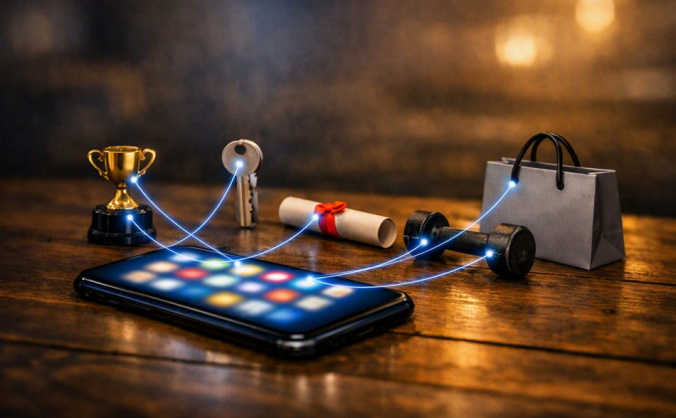
Social media often begins with inspiration. You see someone doing something impressive, creative, or meaningful. At first, it feels motivating. But inspiration can quietly shift into pressure. This pressure often shows up as a sudden urgency to pursue goals that were never yours to begin with.
Someone else’s success can start feeling like evidence that you are falling behind. Their achievements become a silent scoreboard. Their pace becomes the pace you think you should be keeping. What once felt encouraging now feels like a reminder that you are not doing enough.
The Highlight Reel Effect
Social media shows carefully selected moments. You are comparing your everyday reality with someone else’s edited presentation. You see the best angles, the best lighting, the best accomplishments, the best days. When you compare your reality to someone else’s curated moments, their goals can start to feel like the correct ones.
You do not see the arguments, the boredom, the insecurity, the doubt, the unfinished projects, or the days when nothing goes right. You have access to the complicated, unfinished, ordinary parts of your own life, while seeing mostly the polished moments of someone else’s. That comparison is never fair, but it still affects how you feel.
How Comparison Affects Self-Worth
Comparison does not stay on the surface. It begins to shape how you see yourself.
“They are doing better than me” can quietly become “I am not doing enough.” And eventually, “I am not enough.”
Your self-worth becomes tied to external benchmarks. You start evaluating your value based on how closely your life matches what you see online. The more you compare, the more disconnected you become from your own internal sense of worth. When your worth feels uncertain, you may reach for goals that promise validation rather than fulfillment.
When Their Goals Become Your Goals
Comparison does not only affect how you feel. It affects what you pursue.
You may start chasing a career, relationship, lifestyle, appearance, or level of achievement because it looks desirable online rather than because it actually matters to you. Someone else’s goals become your goals. Someone else’s timeline becomes your timeline. You lose sight of what you genuinely want. You begin living a life shaped by external expectations instead of internal values.
Sometimes it helps to pause and ask yourself:
Would I still want this if I had never seen someone else have it?
Would I want this if I weren’t focused on how I would look on social media?
These questions can help you recognize when a goal is coming from your own values and desires versus comparison, external expectations, or the desire to be perceived a certain way.
Getting Back to Your Own Life
The antidote to comparison is not avoidance. It is clarity.
Start by identifying what you value, what you actually want, and what success means to you outside of other people’s expectations. Sometimes, creating some distance from social media can help. Taking a break, even for a short period of time, gives you an opportunity to step away from the constant stream of other people’s achievements, lifestyles, and opinions. Without those comparisons in the background, it may become easier to hear your own thoughts and reconnect with what actually matters to you.
When you reconnect with your own values, other people’s lives stop feeling like a measuring stick. You can appreciate what they have without questioning what you have. You can admire their achievements without losing sight of your own path.
You don’t have to permanently disconnect from social media to benefit from stepping away. Sometimes, you simply need enough distance to remember what you want when you’re not constantly being shown what everyone else is doing.
Final Thoughts
Social media is not inherently harmful. It becomes harmful when it quietly shifts the way you evaluate your own life. The more you watch other people’s choices, achievements, routines, and milestones, the easier it becomes to assume that their path should be your path. Their pace becomes the pace you think you should keep. Their priorities start to feel like the ones you are supposed to have.
This is how your goals can stop being your own. Not because you consciously chose differently, but because you absorbed someone else’s definition of success without realizing it.
The real work is not to disconnect from the world. It is to reconnect with yourself. You can admire someone else’s life while still choosing your own direction. You can appreciate their accomplishments without turning them into a benchmark. You can be inspired without being redirected.
Your goals deserve to come from your values, your experiences, and your sense of meaning. When you return to those internal anchors, comparison loses some of its power. You stop chasing what looks good online and start pursuing what feels meaningful in your actual life.
You do not have to stop admiring other people’s lives. You just have to make sure you are still living your own.